Complete Guide to API Integration: Transform Your Business with Seamless Connectivity
Discover how API integration can revolutionize your business operations, reduce costs, and unlock new growth opportunities.
Have you ever wondered how your favorite food delivery app instantly processes your payment, tracks your order, and sends notifications to your phone—all within seconds? The answer lies in API integration, the invisible powerhouse that connects different software systems and makes them work together seamlessly.
API integration is like having a universal translator for your digital tools. Just as you don’t notice the WiFi signal until it stops working, APIs operate quietly in the background, ensuring your applications communicate effectively without any hiccups.
In today’s digital landscape, understanding API integration isn’t just for tech enthusiasts—it’s essential for any business owner looking to streamline operations, reduce costs, and deliver exceptional user experiences. Whether you’re running an e-commerce store or managing a healthcare practice, APIs can transform how your systems work together.
Let’s dive deep into the world of API integration and discover how it can revolutionize your business operations.
Table of Contents
What is API Integration?
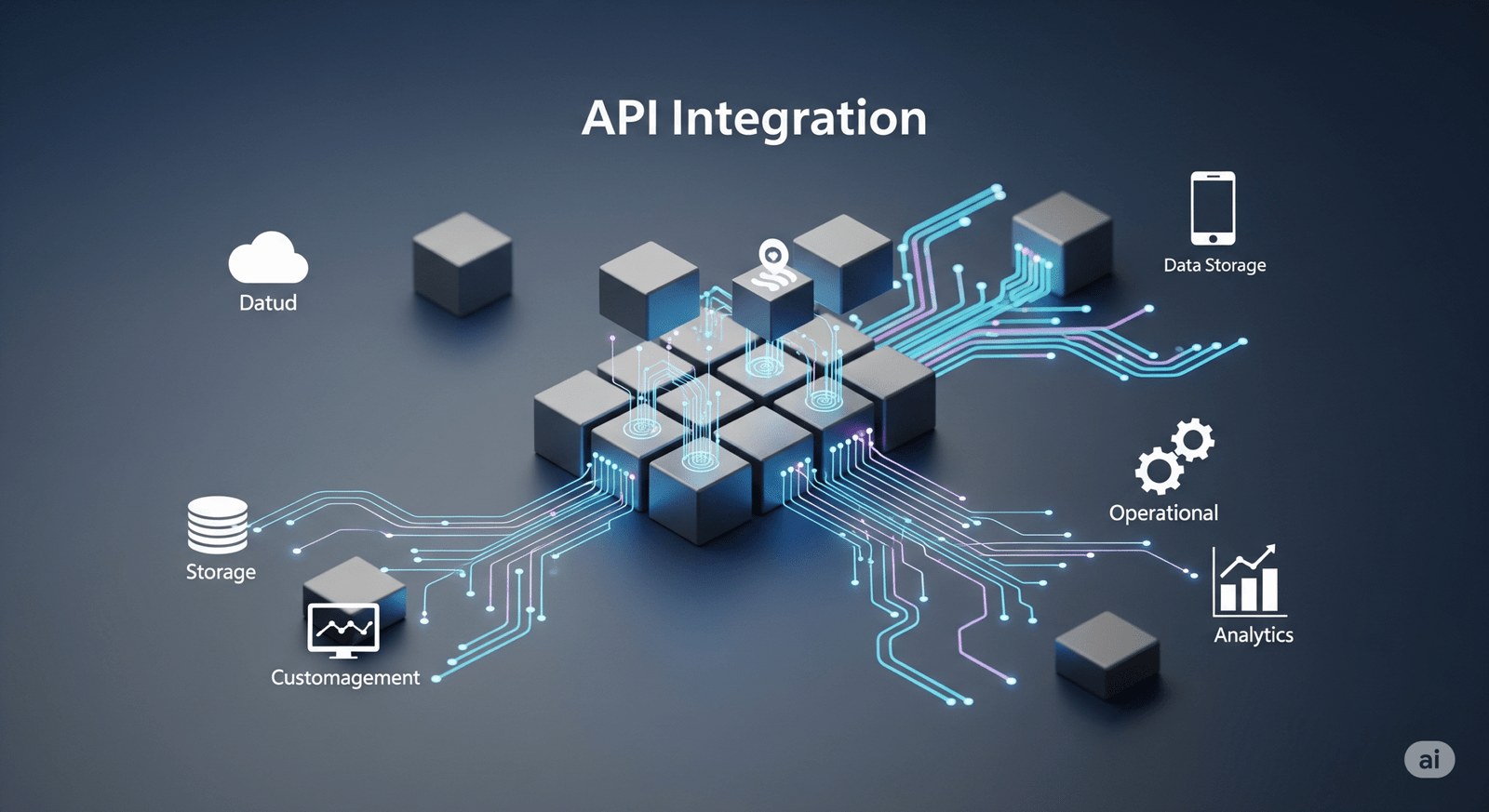
API integration serves as a bridge between different software applications, allowing them to share data and functionality despite being built with different technologies. Think of it as having a skilled interpreter at an international conference—everyone speaks different languages, but the interpreter ensures clear communication.
When you book a ride through Uber, multiple APIs work simultaneously: one processes your payment, another finds nearby drivers, and yet another calculates the optimal route. This seamless coordination is API integration at its finest.
The foundation of API integration rests on three essential components:
Endpoints act as specific addresses where applications can communicate with each other. Requests represent the data or commands sent from one application to another, similar to asking a question. Responses contain the information or confirmation sent back, like receiving an answer to your question.
Consider online shopping as an example. When you click “buy now,” the website’s API sends your order details to the payment processor, inventory system, and shipping provider. Each system responds with confirmation, creating a smooth purchasing experience powered by API integration.
💡 Pro Tip: API Integration is done perfectly by YAAM Web Solutions, ensuring your business systems work together flawlessly without technical headaches.
Types of API Integration
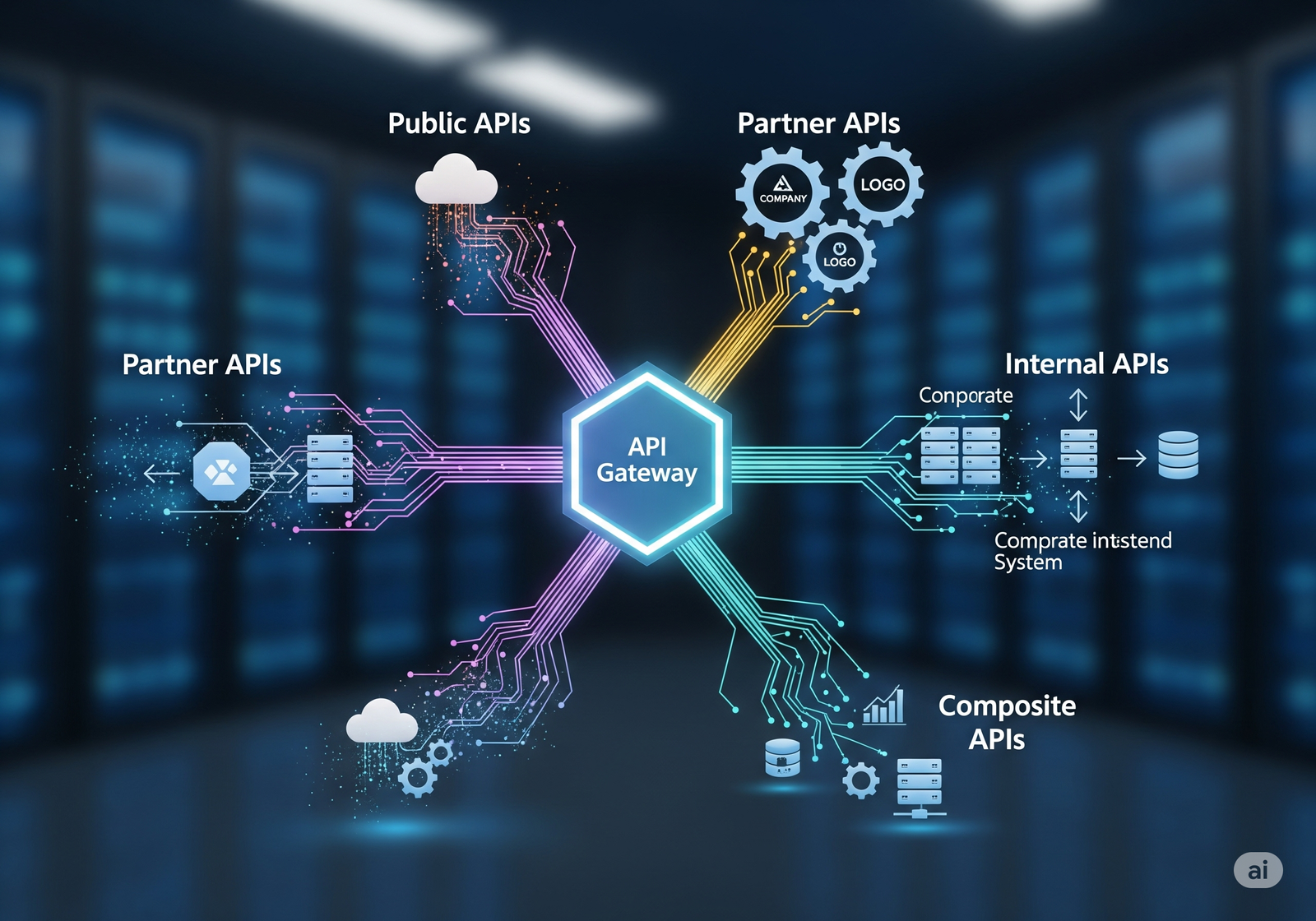
Understanding different types of API integration helps you choose the right approach for your business needs. The global API market reached $6.2 billion in 2023 and continues growing rapidly, highlighting the importance of selecting the correct API type.
Public APIs
Public APIs are openly available for developers worldwide to use. These are like public libraries—anyone can access them to enhance their applications. Google Maps, Twitter, and Facebook offer public APIs that power countless websites and mobile apps. If you’ve ever seen a website display a map or social media feed, that’s public API integration in action.
Partner APIs
Partner APIs operate like exclusive memberships, available only to authorized business partners. Airlines often provide partner APIs to travel booking websites, allowing them to access real-time flight information and pricing. This selective access ensures quality control while enabling strategic partnerships.
Internal APIs
Internal APIs function like private communication channels within a company. They connect different departments and systems, such as linking your HR software with payroll systems. These APIs streamline internal processes and improve operational efficiency without exposing sensitive data to external parties.
Composite APIs
Composite APIs are multitasking champions that combine multiple requests into a single call. Instead of making separate requests to check inventory, process payments, and update customer records, a composite API handles everything simultaneously. This approach reduces complexity and improves performance for complex business operations.
Why API Integration Matters for Your Business
API integration has become the backbone of modern business operations. Companies adopting an API-first strategy design their systems around APIs from the beginning, creating more flexible and scalable infrastructures.
Imagine manually transferring customer data between your CRM system and email marketing platform every day. Without API integration, you’d spend hours on repetitive tasks that could be automated in seconds. This inefficiency not only wastes time but also increases the risk of human error.
Common Business Challenges Solved by API Integration

Data Silos create information barriers between departments, leading to inconsistent data and poor decision-making. API integration breaks down these silos, ensuring everyone works with the same up-to-date information.
Manual Data Entry consumes valuable time and introduces errors. APIs automate these processes, allowing your team to focus on strategic initiatives rather than mundane tasks.
Complex System Connections often require technical expertise and significant resources. Modern API integration platforms make these connections user-friendly, enabling non-technical team members to set up integrations.
Scalability Issues emerge as businesses grow and need their systems to handle increased workloads. APIs provide the flexibility to scale systems up or down based on demand.
Key Benefits of API Integration
API integration delivers measurable benefits that directly impact your bottom line and operational efficiency.
Enhanced Efficiency and Automation
API integration transforms your business systems into a well-coordinated team. When your project management tool automatically updates Slack channels about task completions, your team stays informed without manual notifications. This automation eliminates communication gaps and ensures everyone remains aligned on project progress.
The efficiency gains extend beyond simple notifications. APIs can automate complex workflows, such as triggering inventory reorders when stock levels drop below specified thresholds. This proactive approach prevents stockouts and maintains customer satisfaction.
Cost Reduction and Error Prevention
Manual data entry errors can be costly. A misplaced decimal in an invoice or incorrect shipping address can damage customer relationships and require expensive corrections. API integration eliminates these human errors by automating data transfer between systems.
Studies show that automated processes reduce errors by up to 90% compared to manual operations. This improvement translates directly to cost savings through reduced rework, fewer customer complaints, and improved operational efficiency.
Superior User Experiences
Modern customers expect seamless experiences across all touchpoints. API integration enables features like single sign-on (SSO), where users log in once and access multiple services without repeated authentication. This convenience improves user satisfaction and reduces abandonment rates.
Real-time data synchronization through APIs ensures customers always see current information, whether checking order status, account balances, or product availability. This consistency builds trust and enhances the overall user experience.
Scalability and Future-Proofing
Growing businesses need systems that can adapt to changing requirements. API integration provides the flexibility to add new tools, services, or features without overhauling existing systems. Whether you’re a startup scaling rapidly or an enterprise expanding globally, APIs enable seamless growth.
Cloud-based APIs offer particular advantages for scalability, allowing you to handle traffic spikes without infrastructure investments. During peak seasons or viral marketing campaigns, your systems can automatically scale to meet demand.
Understanding API Integration Costs
API integration costs vary significantly based on project complexity, customization requirements, and ongoing maintenance needs. Understanding these factors helps you budget effectively and choose the most cost-efficient approach.
Factors Affecting API Integration Costs
Customization Level plays a major role in determining costs. Pre-built integrations using existing templates cost less than custom-developed solutions. However, unique business requirements often justify the additional investment in custom API integration.
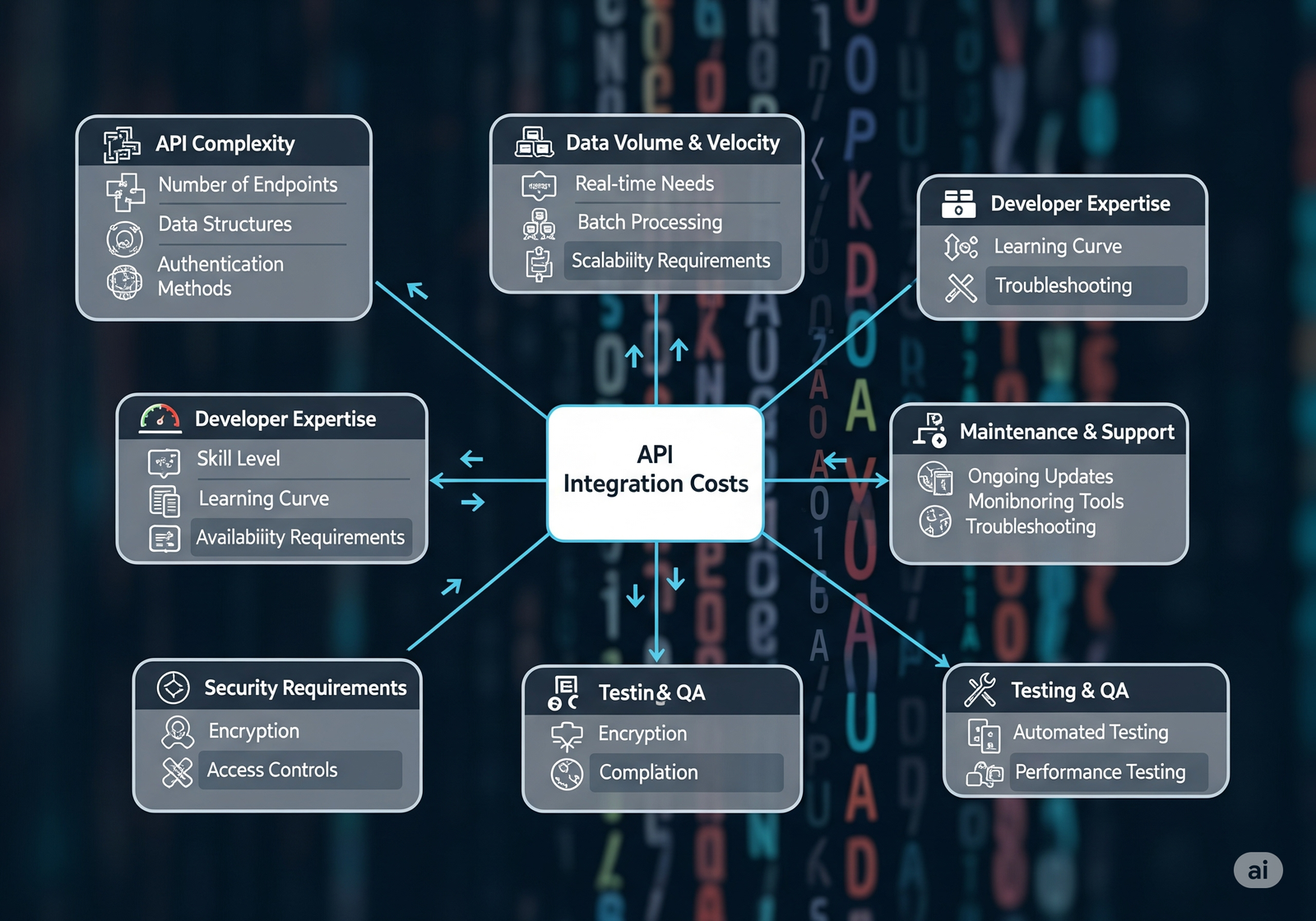
Development Resources include both time and expertise. Complex integrations requiring specialized skills command higher fees, while simple connections between popular platforms cost less.
Infrastructure Requirements affect ongoing costs. Cloud-based solutions typically offer predictable monthly fees, while on-premise integrations may require significant upfront hardware investments.
Maintenance and Support represent ongoing expenses that many businesses overlook during initial planning. Regular updates, security patches, and performance monitoring ensure your integrations remain reliable and secure.
API Integration Cost Approaches
Custom Development offers maximum flexibility but requires significant investment. Expect costs ranging from $75,000 to $200,000 annually for comprehensive custom API integration solutions, including development, testing, and maintenance.
Integration Platform as a Service (iPaaS) solutions like Zapier or Microsoft Power Automate provide middle-ground options. These platforms offer pre-built connectors and visual workflow builders, with costs starting around $600 per month for small businesses.
Pre-Built Solutions represent the most cost-effective option for standard integrations. Many popular software vendors offer native integrations or marketplace solutions that require minimal setup and maintenance.
Real-World Cost Examples
E-commerce Integration: Connecting inventory management, payment processing, and shipping APIs typically costs $15,000 to $40,000 initially, with annual maintenance fees of $8,000 to $15,000.
CRM and Marketing Automation: Integrating customer relationship management with email marketing platforms ranges from $25,000 to $60,000, depending on data complexity and customization requirements.
Healthcare Systems Integration: Medical practice management systems connecting with electronic health records and billing platforms can cost $50,000 to $150,000 due to strict compliance requirements.
🚀 Success Story: API Integration is done perfectly by YAAM Web Solutions, helping clients reduce operational costs by 40% while improving system efficiency.
Real-World API Integration Use Cases
API integration powers innovations across every industry, solving unique challenges and creating new opportunities for businesses worldwide.
Retail and E-commerce
Modern retail operations depend heavily on API integration to deliver seamless shopping experiences. When customers browse products online, APIs connect inventory systems to display real-time availability. During checkout, payment APIs process transactions while shipping APIs calculate delivery costs and times.
Omnichannel retail strategies rely on APIs to synchronize data across online stores, mobile apps, and physical locations. This integration ensures customers see consistent pricing, inventory, and promotions regardless of their shopping channel.
Healthcare Technology
Healthcare providers use API integration to connect electronic health records (EHR) with diagnostic equipment, pharmacy systems, and insurance platforms. This connectivity enables doctors to access complete patient histories, prescribe medications electronically, and streamline billing processes.
Telemedicine platforms leverage APIs to integrate video conferencing, appointment scheduling, and prescription management systems. These integrations create comprehensive virtual care experiences that rival in-person visits.
Financial Services
Banking and fintech companies rely on API integration for real-time transaction processing, fraud detection, and regulatory compliance. Open banking initiatives use APIs to allow third-party developers to build applications and services around financial institutions.
Investment platforms use APIs to provide real-time market data, execute trades, and update portfolio values. These integrations enable sophisticated trading strategies and automated investment management services.
Travel and Hospitality
Travel booking platforms aggregate information from airlines, hotels, and car rental companies through API integration. This connectivity allows customers to compare options, book complete travel packages, and manage itineraries from single applications.
Hotel chains use APIs to connect property management systems with online booking platforms, guest communication tools, and loyalty program databases. These integrations ensure consistent service delivery across all properties.
Education Technology
Educational institutions leverage API integration to connect learning management systems with student information systems, gradebooks, and communication platforms. This connectivity streamlines administrative tasks and improves student experiences.
Online learning platforms use APIs to integrate video hosting, assessment tools, and certification systems. These integrations create comprehensive educational experiences that support diverse learning styles and requirements.
Manufacturing and Supply Chain
Manufacturing companies use API integration to connect production systems with inventory management, quality control, and supplier networks. This connectivity enables real-time visibility into production status and supply chain performance.
Smart factory initiatives rely on APIs to integrate Internet of Things (IoT) sensors with analytics platforms and automated control systems. These integrations optimize production efficiency and predict maintenance requirements.
API Integration Best Practices
Successful API integration requires careful planning, proper implementation, and ongoing maintenance. Following established best practices ensures your integrations remain reliable, secure, and scalable.
Comprehensive Documentation Review
Before implementing any API integration, thoroughly review the provider’s documentation. This review helps you understand capabilities, limitations, rate limits, and authentication requirements. Testing APIs in sandbox environments prevents surprises during production deployment.
Documentation quality often indicates API reliability. Well-maintained documentation with clear examples and regular updates suggests active development and support. Poor documentation may signal potential issues with the API provider.
Security-First Approach
API integration security requires multiple layers of protection. Implement authentication mechanisms like OAuth 2.0 or API keys to control access. Use HTTPS encryption for all data transmission to protect sensitive information during transfer.
Regular security audits identify potential vulnerabilities before they become problems. Monitor API access logs for suspicious activity and implement rate limiting to prevent abuse. Consider using API gateways for additional security and monitoring capabilities.
Choosing Reliable API Providers
Partner with established API providers who demonstrate consistent uptime and performance. Research provider reputation, read user reviews, and check service level agreements (SLAs) before committing to any integration.
Evaluate backup and failover options for critical integrations. Reliable providers offer redundancy and disaster recovery capabilities to minimize service disruptions. Consider multi-vendor strategies for mission-critical integrations to avoid single points of failure.
Planning for Growth and Scale
Design API integration architectures that can grow with your business. Consider future requirements and ensure your chosen solutions can handle increased data volumes and user loads. Cloud-based APIs typically offer better scalability than on-premise solutions.
Implement monitoring and alerting systems to track API performance and usage patterns. This visibility helps you identify bottlenecks before they impact users and plan capacity improvements proactively.
Error Handling and Recovery
Robust error handling ensures your integrations remain functional even when issues occur. Implement retry logic for temporary failures and graceful degradation for partial outages. Log errors comprehensively to facilitate troubleshooting and improvement.
Design fallback mechanisms for critical business processes. If payment APIs fail during checkout, customers should still be able to complete purchases through alternative methods. This redundancy protects revenue and customer satisfaction.
Essential Tools and Platforms
Modern API integration tools simplify complex connection processes, enabling businesses to implement integrations without extensive technical expertise.
Low-Code Integration Platforms
Workato stands out as a comprehensive integration platform designed for enterprise-level workflows. Its intelligent automation capabilities use machine learning to optimize processes and reduce manual intervention. The platform’s extensive connector library supports popular business applications across departments.
Workato’s strength lies in its ability to handle complex, multi-step workflows that span different business functions. For example, it can automate lead qualification processes by connecting marketing automation platforms with CRM systems, scoring algorithms, and sales communication tools.
Developer-Focused Tools
Postman remains the gold standard for API development and testing. Its collaborative workspace features enable development teams to share API collections, test suites, and documentation. The platform’s automated testing capabilities ensure API integration reliability throughout development cycles.
Advanced features like mock servers and API monitoring help developers identify and resolve issues before they impact production systems. Postman’s learning resources and community support make it accessible to developers of all skill levels.
User-Friendly Automation
Zapier democratizes API integration by making it accessible to non-technical users. Its vast library of pre-built integrations covers popular business applications, enabling quick workflow automation without coding.
The platform’s conditional logic capabilities allow users to create sophisticated workflows using simple if-then-else structures. While Zapier excels at simple integrations, complex business processes may require more powerful platforms.
Choosing the Right Platform
Select integration platforms based on your team’s technical expertise, integration complexity, and budget constraints. Small businesses often benefit from user-friendly tools like Zapier, while enterprises typically require platforms like Workato for comprehensive integration management.
Consider total cost of ownership, including subscription fees, development time, and ongoing maintenance requirements. Sometimes, investing in more powerful platforms initially reduces long-term costs and complexity.
For businesses looking to maximize their API integration success, partnering with experienced professionals ensures optimal results and ongoing support.
How YAAM Web Solutions Can Help
At YAAM Web Solutions, we specialize in transforming complex API integration challenges into seamless business solutions. Our expert team combines deep technical knowledge with practical business understanding to deliver integrations that drive real results.
Our API Integration Expertise
We understand that every business has unique requirements and challenges. Our API integration approach begins with comprehensive analysis of your existing systems, business processes, and growth objectives. This foundation ensures our solutions align perfectly with your strategic goals.
Our team has successfully implemented API integration projects across diverse industries, from e-commerce platforms handling thousands of daily transactions to healthcare systems managing sensitive patient data. This experience enables us to anticipate challenges and implement proven solutions.
Comprehensive Integration Services
Custom API Development: We create bespoke APIs tailored to your specific business requirements when off-the-shelf solutions don’t meet your needs. Our custom APIs integrate seamlessly with your existing infrastructure while providing room for future expansion.
Third-Party Integration: Connecting your business systems with external services requires careful planning and execution. We handle the technical complexity while ensuring data security and compliance with relevant regulations.
Legacy System Modernization: Transform outdated systems into modern, connected infrastructure through strategic API integration. Our approach preserves valuable existing functionality while enabling new capabilities and connections.
Integration Strategy Consulting: Not sure where to start with API integration? Our consultants assess your current technology landscape and recommend optimal integration strategies that deliver maximum business value.
Why Choose YAAM Web Solutions

Proven Track Record: Our successful API integration implementations have helped businesses reduce operational costs by up to 45% while improving system efficiency and user satisfaction.
Security-First Approach: We implement enterprise-grade security measures in every integration, ensuring your data remains protected throughout all connections and transactions.
Scalable Solutions: Our API integration architectures grow with your business, supporting increased transaction volumes and new functionality without requiring complete system overhauls.
Ongoing Support: Integration is just the beginning. We provide comprehensive monitoring, maintenance, and optimization services to ensure your APIs continue delivering value as your business evolves.
Transparent Pricing: No hidden fees or surprise charges. We provide detailed project estimates and work within your budget to deliver maximum value for your API integration investment.
Getting Started with YAAM Web Solutions
Ready to transform your business operations through strategic API integration? Contact our team today for a free consultation. We’ll assess your current systems, identify integration opportunities, and develop a customized roadmap for success.
Our proven methodology ensures smooth project delivery, minimal disruption to existing operations, and measurable business improvements. Let us help you unlock the full potential of your digital ecosystem through expertly crafted API integration solutions.
Conclusion
API integration has evolved from a technical necessity to a strategic business advantage. Companies that embrace comprehensive integration strategies position themselves for sustained growth, operational efficiency, and superior customer experiences.
The benefits of API integration extend far beyond simple data sharing. Modern integrations enable automation, reduce errors, improve scalability, and create new opportunities for innovation. Whether you’re streamlining internal processes or enhancing customer-facing applications, APIs provide the foundation for digital transformation.
As the digital landscape continues evolving, API integration will become even more critical for business success. Organizations that invest in robust integration strategies today will be better positioned to adapt to future challenges and opportunities.
The key to successful API integration lies in choosing the right approach for your specific needs, implementing proper security measures, and partnering with experienced professionals who understand both technical requirements and business objectives.
Ready to harness the power of API integration for your business? The journey toward seamless, efficient, and scalable operations begins with a single step. Take that step today and discover how API integration can transform your business operations and competitive position.
🎯 Remember: API Integration is done perfectly by YAAM Web Solutions. Contact us today to start your integration journey and unlock your business’s full potential.
API Integration is done perfectly by YAAM Web Solutions
Transform your business with seamless API integration solutions. Contact YAAM Web Solutions for expert consultation and implementation services that deliver measurable results.