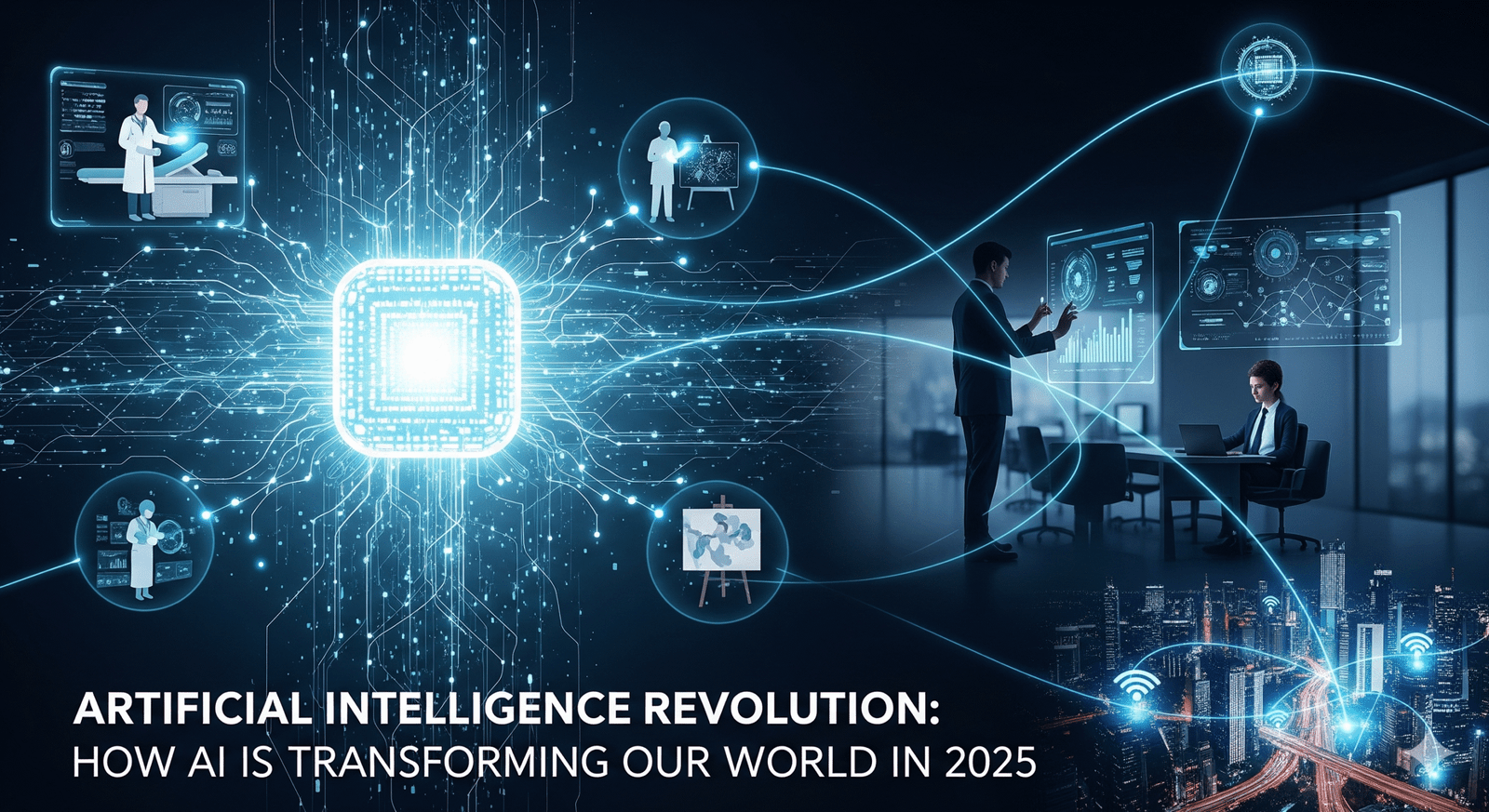
Artificial Intelligence Revolution: How AI is Transforming Our World in 2025
The Artificial Intelligence revolution is no longer a distant future concept—it’s reshaping our reality right now. Every industry, from healthcare to finance, is experiencing unprecedented transformation through AI innovations that seemed like science fiction just decades ago.
Today’s AI systems power everything from the smartphone in your pocket to the most complex business operations worldwide. According to MIT Technology Review, AI adoption has surged by over 300% in enterprise environments, making it clear that we’re living through the most significant technological shift since the internet revolution.
Understanding AI and its implications has become essential for businesses, professionals, and individuals who want to thrive in this rapidly evolving landscape. This comprehensive guide explores how Artificial Intelligence continues to transform our world and what we can expect as these technologies mature.
Ready to harness AI for your business? YAAM Web Solutions specializes in cutting-edge AI adoption strategies that deliver measurable results.
Table of Contents
The Evolution of Artificial Intelligence Technology

Foundation Era: When AI Began (1950s-1980s)
Artificial Intelligence traces its roots to 1956 when John McCarthy first coined the term during the Dartmouth Conference. This pivotal moment marked the beginning of serious scientific inquiry into creating machines that could replicate human intelligence.
Early AI pioneers like Alan Turing and Marvin Minsky established the theoretical foundations that still guide modern AI frameworks today. According to Stanford’s AI Index Report, the development of ELIZA, one of the first conversational programs, demonstrated AI potential for natural language processing—a capability that has evolved into today’s sophisticated chatbots and virtual assistants.
During this foundational period, researchers focused on symbolic AI, creating systems that could manipulate symbols and follow logical rules. While these early attempts had limitations, they established crucial principles that continue to influence AI development today.
Expert Systems: Making AI Practical (1980s-2000s)
The expert systems era marked AI’s transition from academic curiosity to practical business tool. These rule-based systems captured human expertise in specific domains, making AI valuable for real-world applications like medical diagnosis and financial analysis.
IBM’s Deep Blue defeating world chess champion Garry Kasparov in 1997 showcased AI capability to excel in complex strategic thinking. As detailed by IBM Research, this breakthrough demonstrated that intelligent systems could not only match human performance but exceed it in specific domains.
Expert systems laid the groundwork for modern AI-powered tools by proving that automated intelligence could deliver consistent, reliable results in professional settings. This era established trust in AI capabilities and paved the way for broader AI adoption across industries.
The Machine Learning Revolution: Modern AI (2000s-Present)
The shift to machine learning fundamentally changed how intelligent systems operate. Instead of following pre-programmed rules, modern AI learns from data, enabling more flexible and powerful applications.
Deep learning breakthroughs in the 2010s accelerated AI capabilities exponentially. AI frameworks like TensorFlow and PyTorch democratized access to sophisticated development tools, enabling researchers and developers worldwide to create innovative applications.
The launch of ChatGPT in 2022 marked a watershed moment for Artificial Intelligence, bringing conversational AI to mainstream audiences and accelerating AI adoption across virtually every sector. According to OpenAI, today’s systems demonstrate unprecedented capabilities in language understanding, image recognition, and creative tasks.
How Artificial Intelligence Transforms Daily Life
AI Integration in Personal Technology
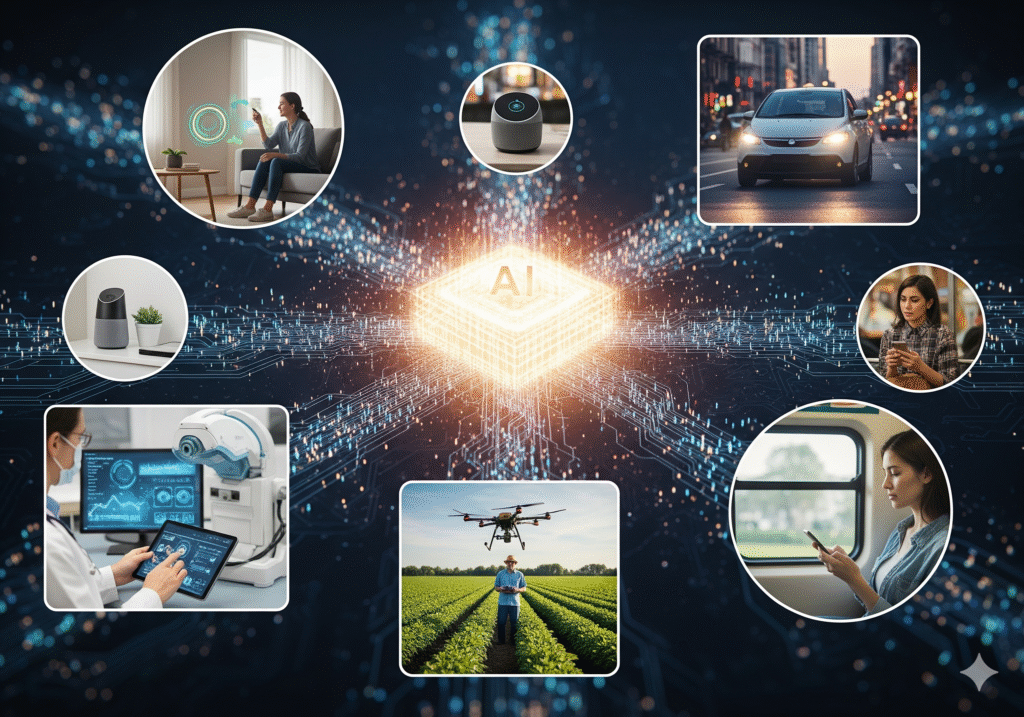
AI in daily life has become so seamlessly integrated that many people interact with intelligent systems dozens of times each day without realizing it. Your smartphone’s camera uses AI to optimize photos, while voice assistants like Siri and Alexa rely on sophisticated algorithms to understand and respond to natural language queries.
Streaming services employ AI to analyze your viewing habits and recommend content you’re likely to enjoy. Navigation apps use intelligent systems to process real-time traffic data and suggest optimal routes, saving millions of hours in commute time daily.
Smart home devices represent another significant application of AI in daily life. These systems learn your preferences and automatically adjust lighting, temperature, and security settings. Modern technology can even predict when you’ll arrive home and prepare your living space accordingly.
Workplace Integration of AI Technology
AI and the future of work represents one of the most significant changes occurring in professional environments today. Rather than replacing human workers entirely, intelligent systems are augmenting human capabilities and creating new opportunities for human-AI collaboration.
Professionals across industries now use AI-powered tools to automate routine tasks, analyze complex datasets, and generate insights that were previously impossible to obtain quickly. Email systems use AI to prioritize messages, schedule meetings, and even draft responses.
Business intelligence platforms powered by AI help executives make data-driven decisions faster and more accurately than ever before. These systems can process vast amounts of information and identify patterns that human analysts might miss, leading to improved strategic planning and operational efficiency.
Transform your business with cutting-edge AI solutions
YAAM Web Solutions helps companies leverage Artificial Intelligence for competitive advantage. Discover our AI adoption consulting services today.

AI Frameworks Shaping the Future
Generative AI: The Creative Revolution
Generative Artificial Intelligence has captured global attention by demonstrating unprecedented creative capabilities. These AI frameworks can produce human-quality text, generate stunning visual artwork, compose original music, and even write functional computer code.
The impact of generative AI extends far beyond content creation. Marketing teams use these AI-powered tools for campaign development, while product designers leverage intelligent systems to explore new concepts and prototypes rapidly.
Educational institutions are integrating generative AI into curriculum development, creating personalized learning materials and assessment systems. As these AI frameworks become more sophisticated, we anticipate revolutionary applications in scientific research, software development, and creative collaboration.
Multimodal AI Systems
Modern AI increasingly combines multiple input types—text, images, audio, and video—creating more comprehensive understanding and responses. This multimodal approach represents a significant advancement in AI frameworks, making intelligent systems more versatile and practical.
Healthcare applications demonstrate the power of multimodal AI, where systems analyze medical imaging alongside patient records and clinical notes simultaneously. This comprehensive approach enables more accurate diagnoses and personalized treatment recommendations.
The future of multimodal AI promises even more sophisticated applications, including real-time translation services, advanced augmented reality experiences, and comprehensive digital assistants that understand context across various communication channels.
AI as a Service: Democratizing Access
AI as a Service (AIaaS) platforms are revolutionizing how organizations access and implement intelligent capabilities. These cloud-based solutions eliminate the need for extensive in-house AI frameworks and infrastructure investments, making advanced technology accessible to businesses of all sizes.
Small and medium enterprises can now leverage the same powerful AI capabilities that were once exclusive to technology giants. AIaaS platforms provide everything from machine learning model training to natural language processing and computer vision services.
This democratization accelerates AI adoption by lowering technical barriers and enabling rapid experimentation with intelligent solutions. Companies can test AI-powered tools without significant upfront investments, leading to more widespread implementation across industries.
Explainable AI: Building Trust
Explainable AI (XAI) addresses one of the most critical challenges in AI adoption: understanding how intelligent systems make decisions. As AI becomes more influential in high-stakes applications, transparency becomes essential for building user trust and ensuring accountability.
Healthcare, finance, and legal sectors particularly benefit from Explainable AI capabilities. When systems recommend medical treatments or approve loan applications, stakeholders need to understand the reasoning behind these decisions.
Future developments in Explainable AI will enable even more sophisticated explanations, helping users understand not just what AI systems decide, but why they make those decisions and how confident they are in their conclusions.
The Path to Artificial General Intelligence
Artificial General Intelligence (AGI) represents the ultimate goal of AI research—creating machines with human-level intelligence across all cognitive domains. While current AI excels in specific tasks, AGI would demonstrate flexible, general-purpose intelligence comparable to human capabilities.
Research progress toward Artificial General Intelligence accelerates as computing power increases and new algorithmic approaches emerge. Leading AI frameworks are incorporating more sophisticated reasoning capabilities, bringing us closer to AGI realization.
The development of Artificial General Intelligence would fundamentally transform civilization, potentially solving complex global challenges while raising profound questions about the future relationship between humans and intelligent machines.
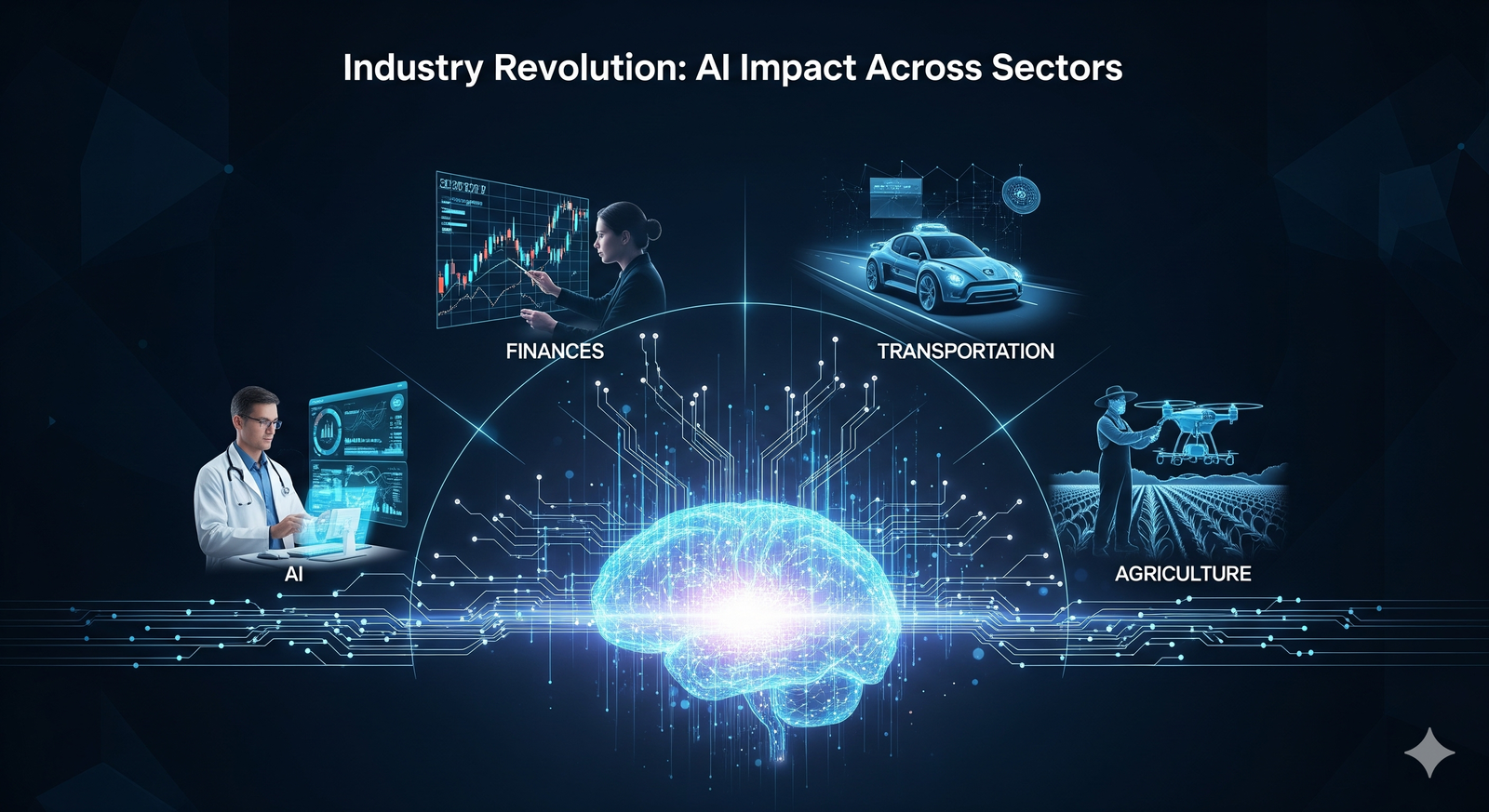
Industry Revolution: AI Impact Across Sectors
Healthcare: Artificial Intelligence Saving Lives
AI in healthcare delivers breakthrough improvements in diagnosis accuracy, treatment personalization, and patient care efficiency. Modern systems can detect diseases like cancer earlier and more accurately than traditional diagnostic methods, potentially saving millions of lives annually. According to research published in Nature Medicine, AI-powered diagnostic tools now match or exceed human specialists in many areas.
Radiology departments now use AI-powered tools to analyze medical imaging with precision that matches or exceeds specialist physicians. These intelligent systems can identify subtle abnormalities that human eyes might miss, leading to earlier interventions and better patient outcomes.
Drug discovery represents another transformative application of AI in healthcare. Intelligent systems accelerate the identification of promising pharmaceutical compounds, reducing development timelines from decades to months. McKinsey & Company reports this acceleration could bring life-saving treatments to patients faster than ever before.
Personalized medicine powered by AI analyzes genetic data, medical history, and lifestyle factors to recommend optimal treatment plans for individual patients. This precision approach improves treatment effectiveness while reducing adverse side effects and healthcare costs.
Education: Artificial Intelligence Personalizing Learning
AI in education personalizes learning experiences and makes quality education more accessible worldwide. Intelligent tutoring systems adapt to individual student learning styles, pacing, and knowledge gaps, creating truly customized educational experiences.
These AI-powered tools provide instant feedback, identify areas where students struggle, and suggest personalized study resources. Language learning applications use AI to simulate conversation partners and provide pronunciation feedback, making language acquisition more engaging and effective.
Administrative tasks like grading, scheduling, and student progress tracking become automated through AI in education, allowing educators to focus on teaching, mentoring, and curriculum development activities that require human expertise and emotional intelligence.
Finance: Artificial Intelligence Revolutionizing Money Management
AI in finance transforms everything from fraud detection to investment management. Machine learning algorithms analyze transaction patterns to identify suspicious activities in real-time, protecting customers and financial institutions from billions in potential losses annually.
Robo-advisors use AI to provide personalized investment advice based on individual risk tolerance, financial goals, and market conditions. These AI-powered tools make professional-grade financial advice accessible to investors regardless of portfolio size.
Credit scoring systems enhanced by AI in finance incorporate alternative data sources to make more accurate lending decisions. This approach helps underserved populations access credit while reducing default risks for lenders.
Manufacturing: AI Excellence in Industry 4.0
AI in manufacturing optimizes production processes, reduces waste, and improves product quality through predictive maintenance and intelligent automation. Smart factories use AI to coordinate complex production schedules and supply chain logistics with unprecedented efficiency.
Predictive maintenance systems analyze sensor data to forecast equipment failures before they occur, minimizing costly downtime and repair expenses. Quality control systems use computer vision to detect defects with greater accuracy and speed than human inspectors.
AI-driven innovation in supply chain optimization adjusts production and inventory levels based on demand forecasting, reducing waste while ensuring product availability. This optimization can reduce operational costs by up to 20% while improving customer satisfaction.
Transportation: The Mobility Revolution
AI in transportation accelerates autonomous vehicle development, optimizes traffic flow, and improves transportation safety. Self-driving car technology combines computer vision, sensor fusion, and machine learning to navigate complex traffic environments safely.
Smart traffic management systems use AI to optimize signal timing, reduce congestion, and minimize fuel consumption across urban transportation networks. These systems can reduce commute times by up to 30% in major metropolitan areas.
Logistics companies leverage AI in transportation for route optimization, reducing delivery times and transportation costs. Intelligent systems can process real-time traffic data, weather conditions, and delivery priorities to create optimal routing plans that adapt to changing conditions.
Customer Service: Enhancing User Experience
AI in customer service transforms how businesses interact with customers through intelligent chatbots, sentiment analysis, and personalized support experiences. Modern AI-powered tools can handle routine inquiries instantly while escalating complex issues to human agents when appropriate.
Natural language processing enables chatbots to understand customer intent and provide relevant solutions across multiple languages. Sentiment analysis helps companies gauge customer satisfaction and identify potential issues before they escalate into larger problems.
Predictive analytics powered by AI anticipate customer needs and proactively offer solutions, improving customer satisfaction while reducing support costs. This proactive approach can increase customer retention rates by up to 15%.
Cybersecurity: Protecting Digital Assets
AI in cybersecurity provides advanced threat detection and response capabilities that adapt to evolving security landscapes. Machine learning algorithms identify unusual network behavior patterns that might indicate sophisticated cyberattacks.
AI-powered tools analyze vast amounts of security data to detect threats that traditional signature-based approaches might miss. Automated incident response systems can contain and remediate security breaches faster than human responders alone.
Predictive security analytics help organizations identify vulnerabilities before attackers exploit them, enabling proactive defense strategies. AI in cybersecurity can reduce incident response times by up to 70%, significantly limiting potential damage from security breaches.
Marketing: Precision Targeting and Personalization
AI in marketing enables hyper-personalized customer experiences and data-driven campaign optimization. Machine learning algorithms analyze customer behavior patterns to predict purchasing intent and recommend optimal marketing strategies.
Dynamic pricing systems use AI to adjust product prices in real-time based on demand, competition, and customer segments. Content personalization engines deliver tailored messages, product recommendations, and offers to individual customers.
Marketing automation platforms powered by AI optimize email send times, subject lines, and content for maximum engagement. Attribution modeling helps marketers understand which channels drive the most valuable conversions, improving return on marketing investment.
Navigating AI Challenges and Risks
Employment Impact and Job Disruption
AI job disruption represents one of the most immediate challenges facing workers across industries. While Artificial Intelligence creates new job categories in AI development, data science, and human-AI collaboration, it also automates tasks previously performed by humans.
Studies by World Economic Forum suggest that up to 40% of current jobs may be significantly affected by automation within the next two decades. However, historical precedent shows that technological revolutions typically create more jobs than they eliminate, though often requiring new skill sets.
Success in navigating AI and the future of work lies in proactive workforce development, continuous learning programs, and policies that support workers during transitions to AI-augmented roles rather than AI-replaced positions.
Ethical Considerations and Bias Issues
AI ethics and bias concerns arise when intelligent systems inadvertently perpetuate or amplify human prejudices present in training data. Biased AI can unfairly impact hiring decisions, loan approvals, and criminal justice outcomes.
Addressing these challenges requires diverse development teams, comprehensive bias testing, and ongoing monitoring of system performance across different demographic groups. The Partnership on AI and other ethical AI frameworks help organizations identify and mitigate potential harmful impacts.
Regulatory frameworks increasingly require transparency in AI decision-making processes, particularly for systems that significantly impact human lives and opportunities. Organizations must balance AI adoption with ethical responsibility.
Information Integrity and Deepfakes
AI deepfakes and sophisticated content generation capabilities create new challenges for information integrity and truth verification. Advanced AI can now generate videos, audio, and text that are virtually indistinguishable from authentic content.
These capabilities enable malicious actors to create convincing fake news, impersonate public figures, and manipulate public opinion through fabricated evidence. Social media platforms struggle to keep pace with increasingly sophisticated AI deepfakes.
Solutions require collaboration between technology companies, policymakers, and civil society to develop detection tools, verification standards, and legal frameworks that protect information integrity. Organizations like the AI Safety Institute are working to preserve legitimate uses of generative AI while addressing harmful applications.
Privacy Protection and Data Security
AI data privacy concerns intensify as intelligent systems require vast amounts of personal data for training and operation. Companies collect, store, and analyze unprecedented amounts of information about individual behavior, preferences, and activities.
Data breaches involving AI systems can expose sensitive personal information, while AI-powered surveillance technologies raise concerns about privacy erosion and authoritarian monitoring capabilities.
Protecting privacy requires robust data governance frameworks, privacy-preserving AI frameworks, and regulations that balance innovation benefits with individual privacy rights. Organizations must implement AI data privacy protections from the design phase.
Environmental Impact and Climate Concerns
AI and climate change intersect in complex ways, with Artificial Intelligence both contributing to and potentially helping solve environmental challenges. Training large AI models requires enormous computational resources, leading to significant energy consumption and carbon emissions.
Data centers powering AI applications consume increasing amounts of electricity, often generated from fossil fuels. However, AI-powered tools also enable more efficient energy distribution, optimized transportation systems, and environmental monitoring capabilities. Google’s AI for Social Good initiative demonstrates how AI can address climate challenges.
Sustainable AI development requires energy-efficient algorithms, renewable energy adoption for data centers, and careful consideration of environmental costs versus benefits for applications.
Preparing for an AI-Powered Future
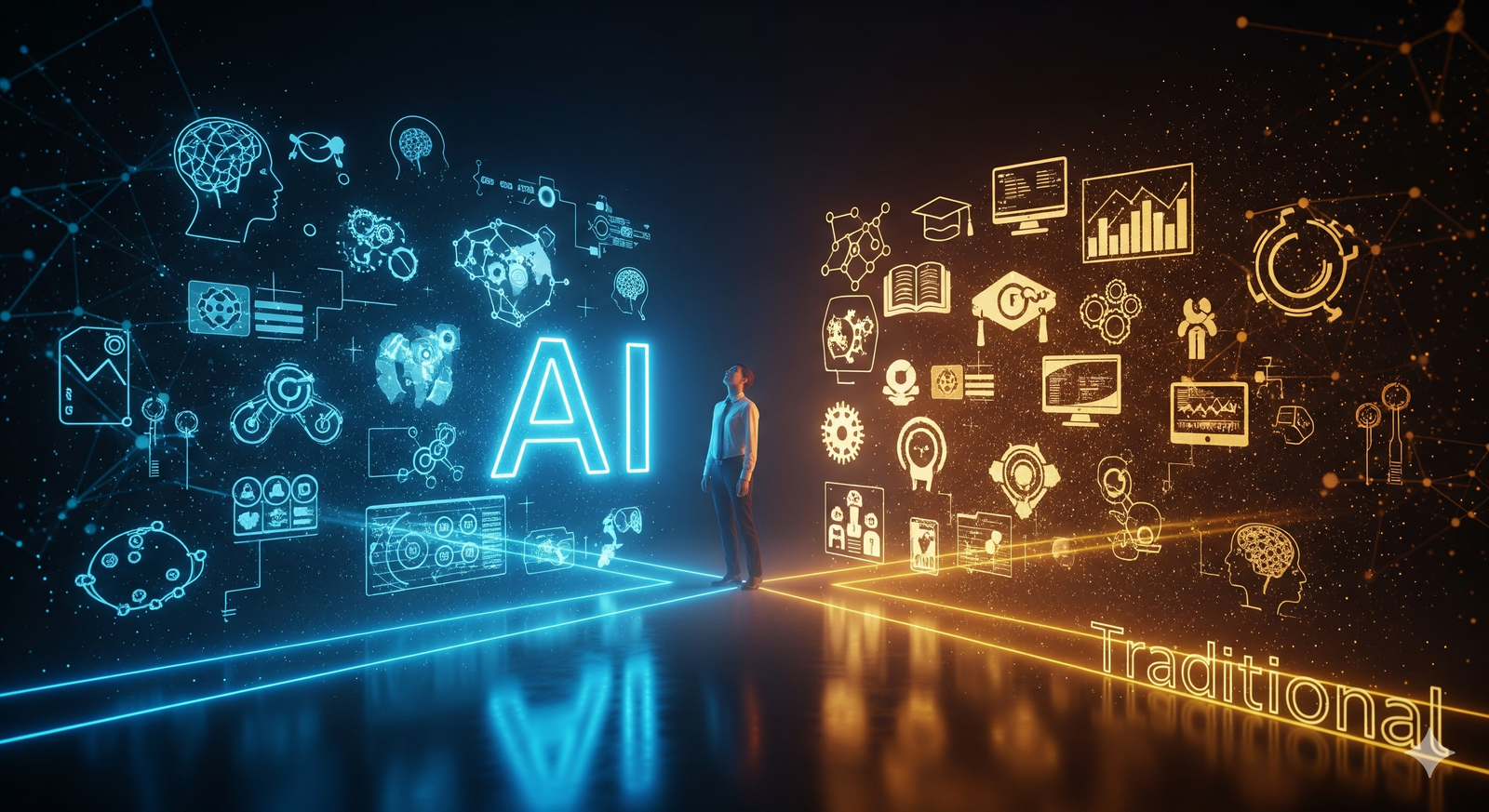
Strategic Business Integration
Organizations must develop comprehensive AI adoption strategies that align with business objectives while considering ethical implications and workforce impacts. Successful integration requires leadership commitment, cultural change management, and substantial technology investments.
Companies should start with pilot projects that demonstrate clear value from implementation, then gradually expand capabilities across operations. Building internal AI expertise through training and strategic hiring ensures organizations can effectively manage and optimize intelligent systems.
Strategic partnerships with AI technology providers and consultants can accelerate AI adoption while reducing risks associated with complex AI frameworks deployment.
Workforce Development for the AI Era
Preparing for AI and the future of work requires comprehensive workforce development programs that help employees develop AI-complementary skills. Critical thinking, creativity, emotional intelligence, and complex problem-solving become increasingly valuable in AI-augmented workplaces.
Organizations should invest in continuous learning platforms, cross-functional training, and career development programs that help workers transition to new roles enhanced by AI-powered tools. Collaboration between educational institutions and industry ensures curriculum remains relevant to evolving job requirements.
Government policies supporting workforce transitions, including retraining programs and social safety nets, help ensure that AI benefits are distributed broadly across society rather than concentrated among technology elite.
Regulatory and Governance Frameworks
Effective governance requires balanced regulations that promote innovation while protecting public interests. Policymakers must understand AI capabilities and limitations to craft appropriate oversight mechanisms.
International cooperation becomes essential as AI technologies cross borders and impact global systems. Organizations like IEEE and standards bodies work to establish common frameworks for safety, testing, and deployment.
Industry self-regulation initiatives complement government oversight, with companies establishing internal ethics boards and responsible development practices.
Ready to future-proof your business with AI?
YAAM Web Solutions offers comprehensive AI adoption consulting and implementation services. Contact our experts to develop your strategy today.
The Future of AI Technology
Artificial Intelligence stands poised to reshape virtually every aspect of human society, from how we work and learn to how we address global challenges and interact with technology. The transformation is already underway, accelerating at an unprecedented pace across industries and applications worldwide.
The journey ahead requires careful navigation of both opportunities and risks. While AI promises tremendous benefits through enhanced productivity, improved decision-making, and innovative solutions to complex problems, we must thoughtfully address challenges related to employment displacement, ethical considerations, and societal impacts.
Success in an AI-powered future depends on proactive preparation, continuous learning, and thoughtful implementation strategies. Organizations that embrace AI adoption while maintaining focus on human values and ethical considerations will thrive in this evolving landscape.
AI democratization ensures that intelligent technology benefits extend beyond technology giants to small businesses, educational institutions, and individual users worldwide. This democratization accelerates innovation and ensures that AI-driven innovation serves diverse communities and applications.
Artificial Intelligence is not just changing technology—it’s redefining what’s possible for human achievement and progress. By understanding its trajectory and preparing appropriately, we can harness AI’s transformative power to create a more prosperous, equitable, and innovative future for all.
The question isn’t whether AI will transform our world—that transformation is happening now. The real question is how we’ll adapt, evolve, and ensure that AI-driven innovation serves humanity’s best interests as we move forward into an increasingly intelligent future.
Ready to embrace the AI revolution? YAAM Web Solutions specializes in helping businesses navigate AI adoption with customized strategies, implementation support, and ongoing optimization. Our team of experts brings years of experience in developing and deploying solutions that deliver measurable results.
Contact YAAM Web Solutions today to discover how Artificial Intelligence can transform your business and position you for success in the digital future powered by AI-driven innovation.
Looking for expert guidance on implementation? YAAM Web Solutions offers comprehensive AI adoption consulting services to help your organization harness the full potential of intelligent technologies and AI-powered tools.